

We use cookies to ensure our site works properly, personalize your experience, and analyze how people use our pages. By clicking "Accept All," you agree to the storing of cookies on your device. You can customize your choices or withdraw your consent at any time by toggling your preferences.
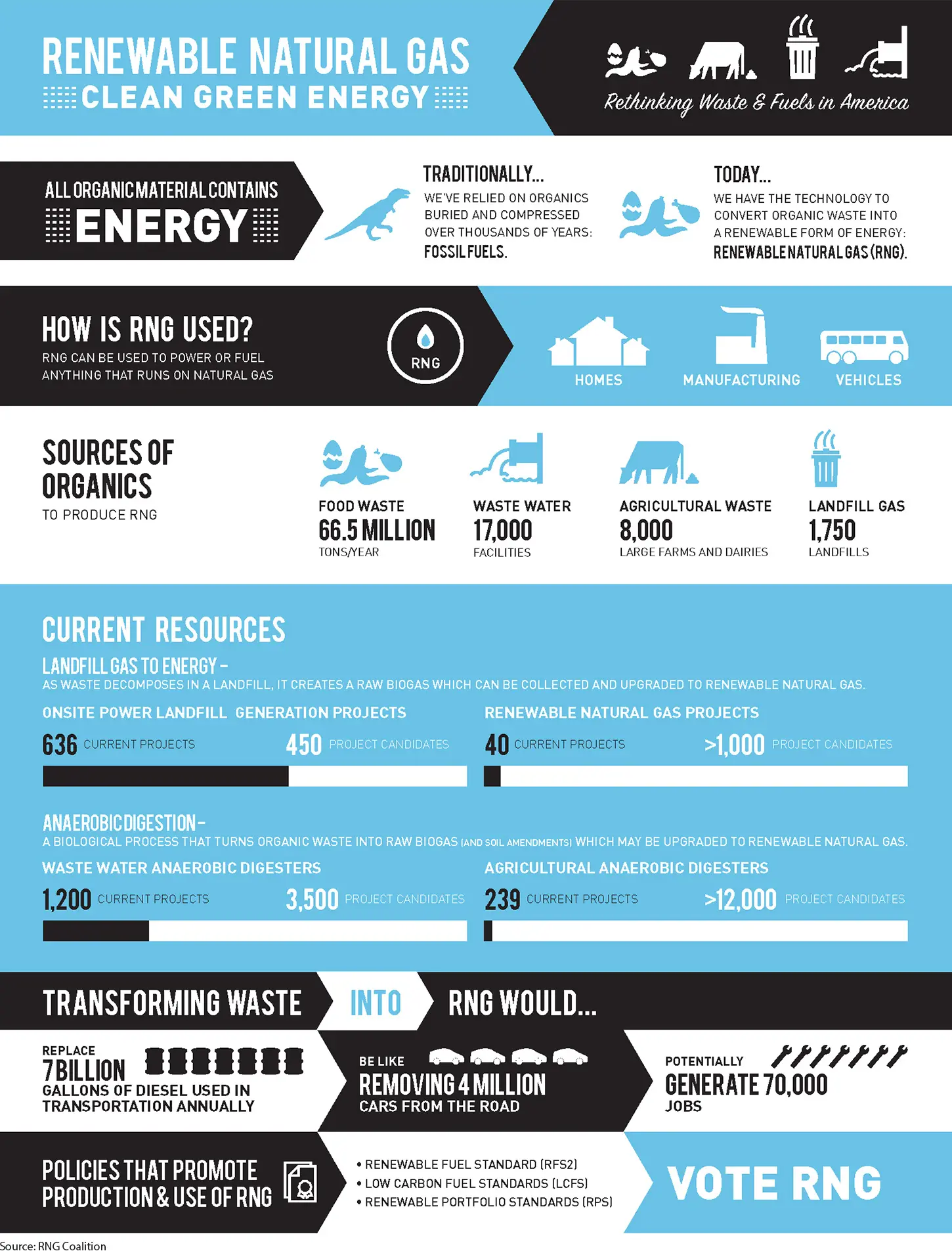
How we turn garbage into something clean
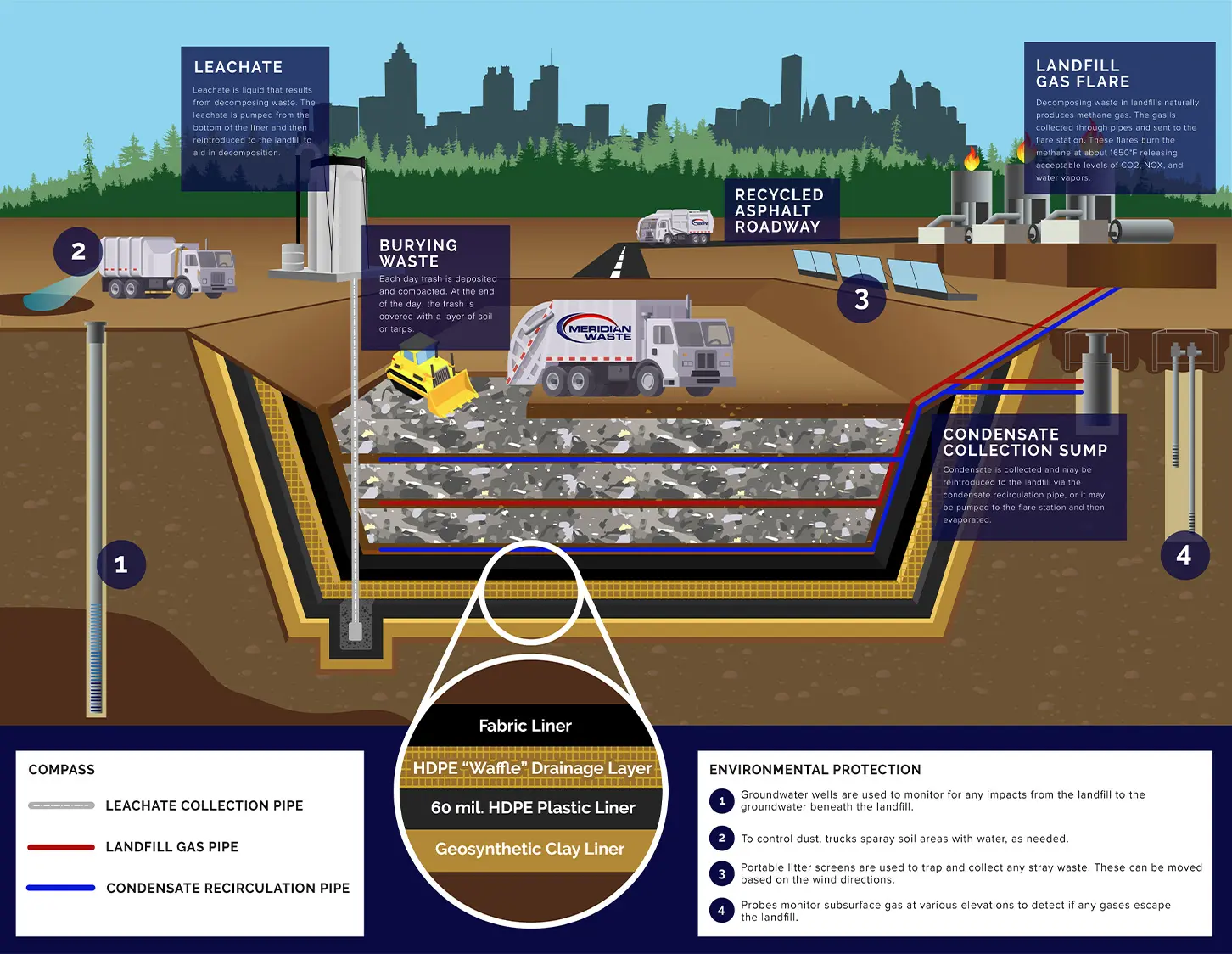
Meridian Waste makes significant investment in the communities we serve through the safe and environmentally sound operations and maintenance of our landfills. We resolve to be good neighbors committed to the protection of the environment and sustainability for the long term future.
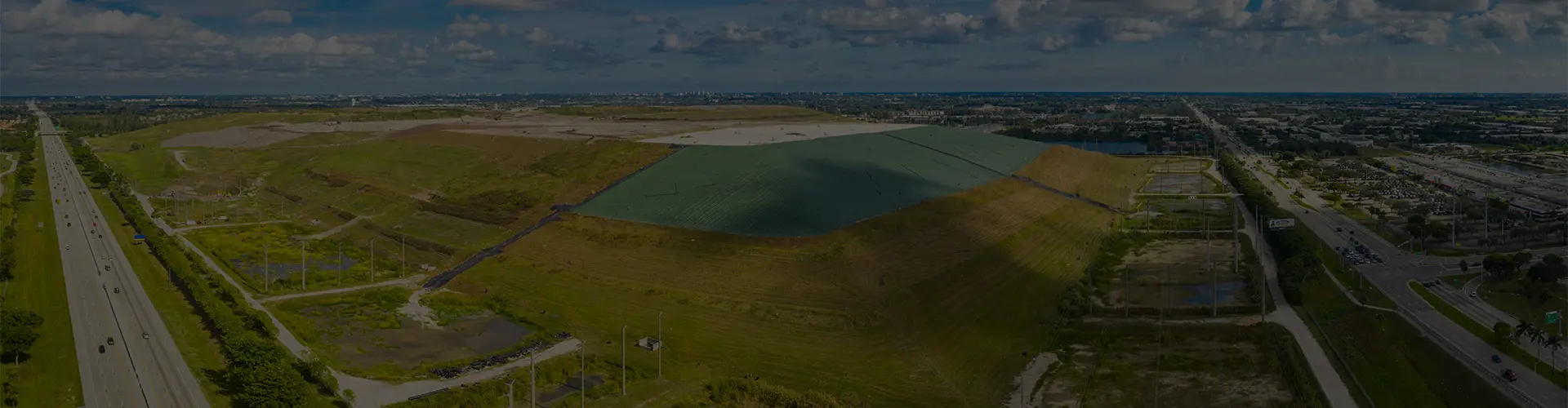
Our landfill gas-to-energy systems exemplify our investment and commitment to the communities we serve and the world we all share.
How does landfill gas to energy work?
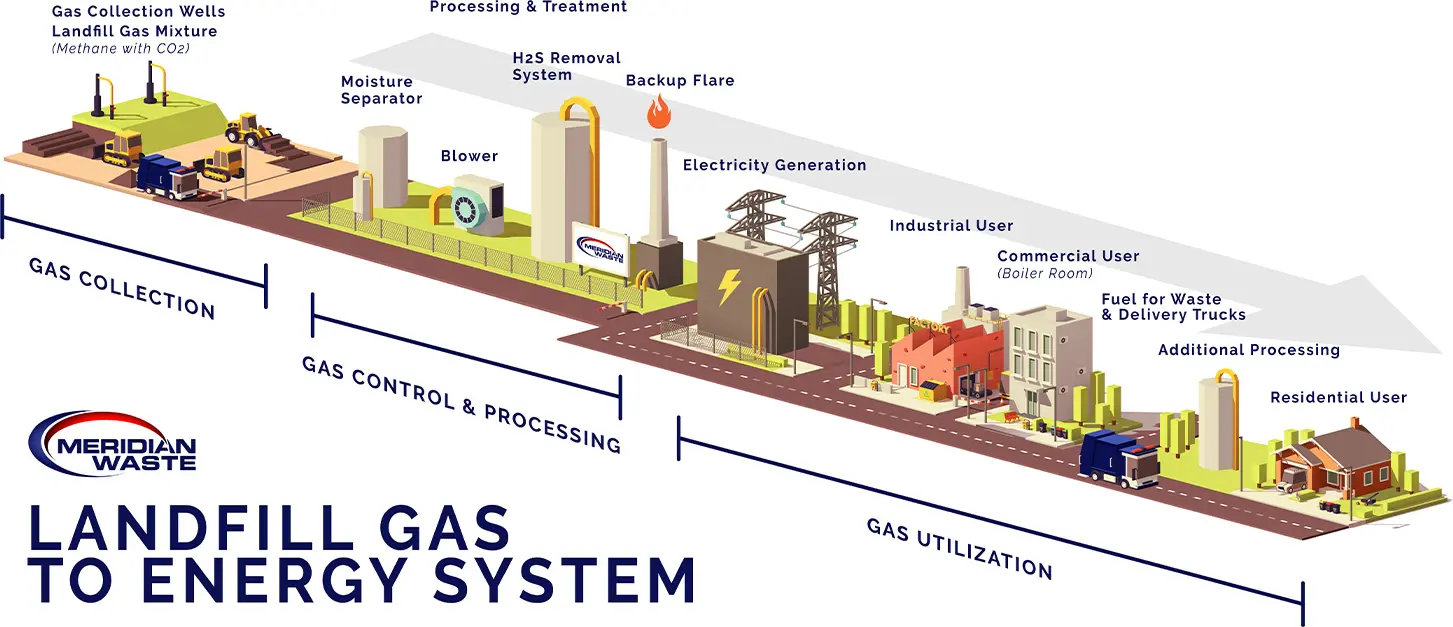
Gases are created when organic waste breaks down or decomposes within a MSW landfill. Modern landfills have landfill gas collection systems to collect this landfill gas, which contains approximately 50% methane and is either destroyed by combusting it in a flare or is diverted to an on-site facility for the conversion of this gas to energy thus preventing it from escaping into the atmosphere as a greenhouse gas.
The treated landfill gas can be pumped off site to a manufacturer or commercial business near the landfill to supplement or replace their natural gas usage in the form of Renewable Natural Gas (RNG). It can also be used to generate electricity at the landfill that is then delivered to the electrical grid to power homes and businesses.
This is why the conversion of landfill gas to energy is an effective means of recycling and reusing this valuable resource.

The U.S. Environmental Protection Agency (EPA) has endorsed landfill gas as an environmentally friendly energy resource that reduces our reliance on fossil fuels such as coal and oil.
Projects in the pipeline
Meridian Waste is currently constructing landfill gas-to-energy systems at three of its MSW landfills. These projects take about three years to complete.
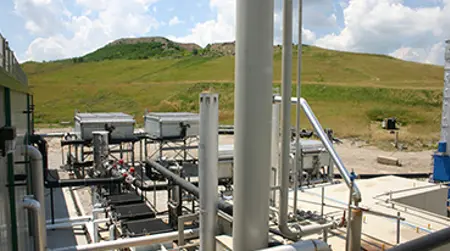
Eagle Ridge Landfill in Bowling Green, Missouri
estimated completion Spring 2023
RNG created at the Eagle Ridge Landfill Gas-to-Energy plant will be piped into the existing interstate Panhandle Eastern Pipeline (owned by Energy Transfer). It will then be used to power CNG delivery vehicles like those used by UPS and Amazon.
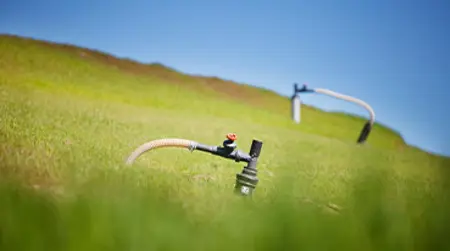
Tri City Landfill in Petersburg, Virginia
estimated completion Fall 2023
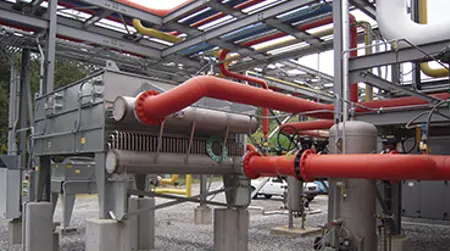
Lunenberg Landfill in Lunenberg, Virginia
estimated completion Fall 2023